

Scaling Digital Products With Cross-Platform Frameworks
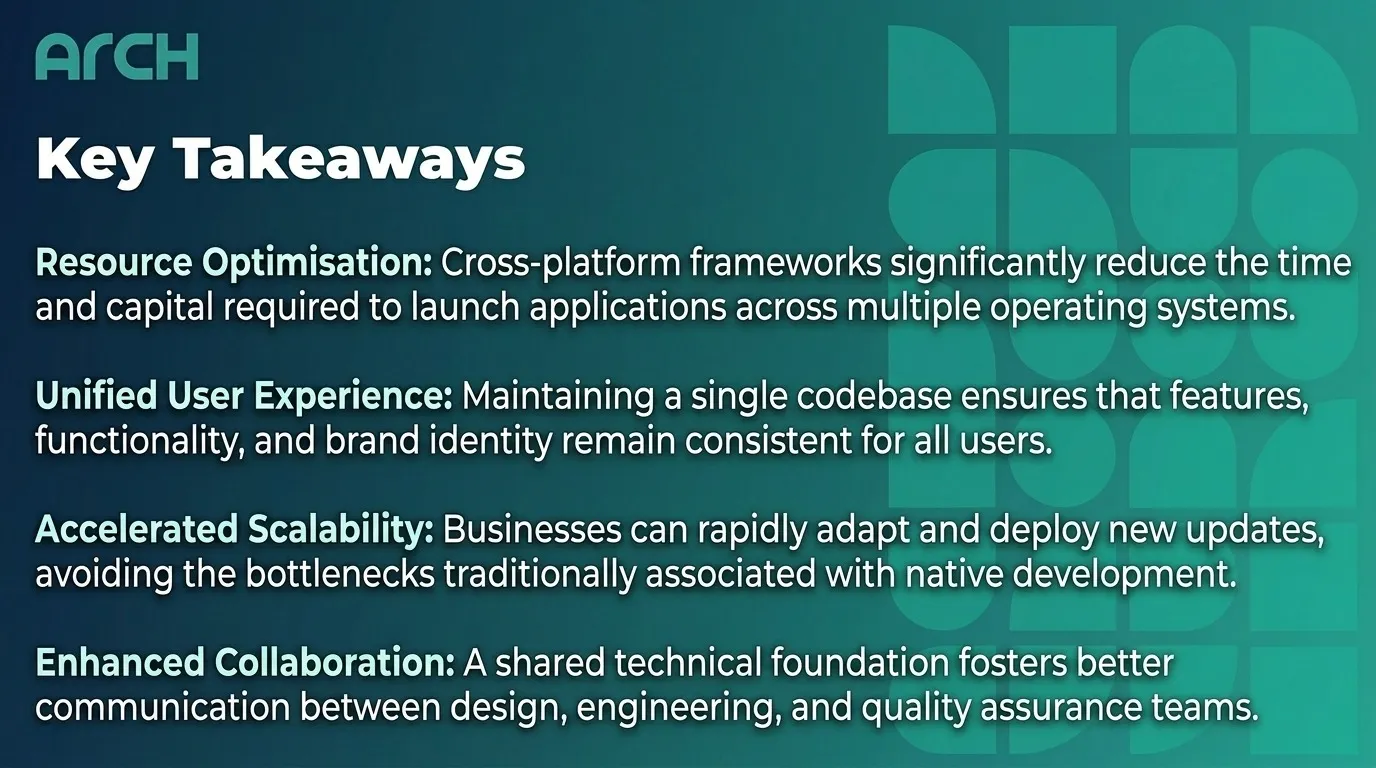
Key Takeaways
-
Resource Optimisation: Cross-platform frameworks significantly reduce the time and capital required to launch applications across multiple operating systems.
-
Unified User Experience: Maintaining a single codebase ensures that features, functionality, and brand identity remain consistent for all users.
-
Accelerated Scalability: Businesses can rapidly adapt and deploy new updates, avoiding the bottlenecks traditionally associated with native development.
-
Enhanced Collaboration: A shared technical foundation fosters better communication between design, engineering, and quality assurance teams.
The New Era of Digital Product Scalability
The modern digital landscape demands solutions that are agile, responsive, and ultimately scalable. To keep pace with shifting market demands, forward-thinking leaders are rethinking how they construct their software architecture. This evolution has sparked a significant shift toward cross-platform frameworks in digital product development.
Rather than maintaining isolated codebases for different operating systems, teams are embracing unified strategies. This collaborative approach allows organisations to deploy updates seamlessly across diverse channels, ensuring a consistent user experience. By prioritising cross-platform environments, modern enterprises can optimise their resources and focus heavily on long-term value creation.
When digital products are impact-driven by design, they naturally align with sustainable growth strategies. A unified codebase reduces repetitive tasks, enabling development teams to concentrate on innovation and core feature enhancements. Consequently, businesses can adapt rapidly to new opportunities without being constrained by legacy technical debt.
Strategic Value of Unified Environments
Building sustainable products requires an architecture that can handle sudden surges in user engagement and evolving business requirements. This is where cross-platform technologies demonstrate their true strategic value. They allow development teams to write code once and deploy it across iOS, Android, and web platforms with minimal friction.
This unified methodology transforms the way businesses approach product rollouts and iterative testing. Instead of siloing resources into platform-specific teams, organisations can foster a deeply collaborative environment. When everyone works from the same foundational architecture, resolving bugs and implementing user feedback becomes remarkably efficient.
Partnering with a dedicated digital web and mobile app development company can further accelerate this transformation. Expert teams can guide businesses through the complexities of cross-platform migration, ensuring that the final product remains highly performant. Ultimately, this partnership approach helps leaders craft applications that are scalable, reliable, and thoroughly robust.
Fostering Collaborative Innovation
Cross-platform development is not merely a technical upgrade; it represents a fundamental shift in team dynamics and operational workflows. By breaking down the barriers between different development disciplines, companies encourage a culture of shared responsibility. Engineers, designers, and product managers can align their objectives more clearly when working within a singular framework.
Furthermore, this alignment directly benefits the end consumer by delivering a polished, seamless experience regardless of the device they use. Whether interacting via a smartphone or a desktop browser, user behaviour remains consistent when the interface behaves predictably. This reliability fosters trust and long-term brand loyalty, which are essential components of sustainable business growth.
To remain competitive, modern enterprises must adopt tools that enable swift pivots and responsive feature integrations. Cross-platform frameworks provide the agility required to test new concepts without committing extensive resources to platform-specific builds. In essence, these frameworks empower teams to be proactive rather than reactive in their product strategies.
Designing for Long-Term Growth
Scalability is the cornerstone of any digital product that intends to dominate its market over the next decade. As consumer expectations shift, applications must be capable of integrating complex technologies without requiring total overhauls. Cross-platform architectures offer the perfect modular environment to support these ongoing enhancements.
Products that are built for what’s next anticipate growth and are structured to accommodate an expanding user base effortlessly. By leveraging shared libraries and universal components, development teams can scale infrastructure efficiently alongside business success. This forward-thinking strategy ensures that digital investments yield maximum returns over their entire lifecycle.
Moreover, streamlining the maintenance process frees up valuable capital that can be reinvested into strategic marketing or further research. Companies no longer have to compromise between maintaining existing applications and innovating new digital solutions. The cross-platform approach delivers the perfect balance of operational efficiency and limitless scalability.
Conclusion
Navigating the shift toward cross-platform frameworks is a vital step for businesses prioritising scalability and efficiency in today’s market. By consolidating development efforts into a single, cohesive environment, organisations can dramatically accelerate their time to market. This strategy not only optimises immediate resources but also establishes a foundation that can absorb historical technical constraints.
Ultimately, embracing a unified development process ensures that digital products are agile, resilient, and inherently adaptable. Fostering a collaborative workflow empowers teams to focus on delivering tangible value to their users rather than managing technical silos. As the digital landscape continues to evolve, these scalable frameworks will remain the bedrock of successful, modern business strategies.
Frequently Asked Questions
What makes cross-platform frameworks more scalable than native development? Cross-platform frameworks use a single codebase to deploy applications across multiple platforms simultaneously. This unified approach reduces the time, cost, and complexity of scaling operations or releasing updates, compared to managing separate native codebases.
Do cross-platform applications sacrifice performance for convenience? Historically, there were minor performance gaps, but modern frameworks now deliver near-native performance. When properly optimised by experienced developers, these applications can handle demanding features and complex animations flawlessly.
How does a unified codebase improve team collaboration? A single codebase eliminates the silos between distinct platform-specific engineering teams. Designers, testers, and developers can work within a shared ecosystem, ensuring consistent communication, faster bug resolution, and a unified product vision.
